
Table of Contents
- Introduction: Why Content SEO Tools Matter Now
- Section 1: Search Has Changed – Your Tools Must Change Too
- Section 2: Key Types of Content SEO Tools to Know
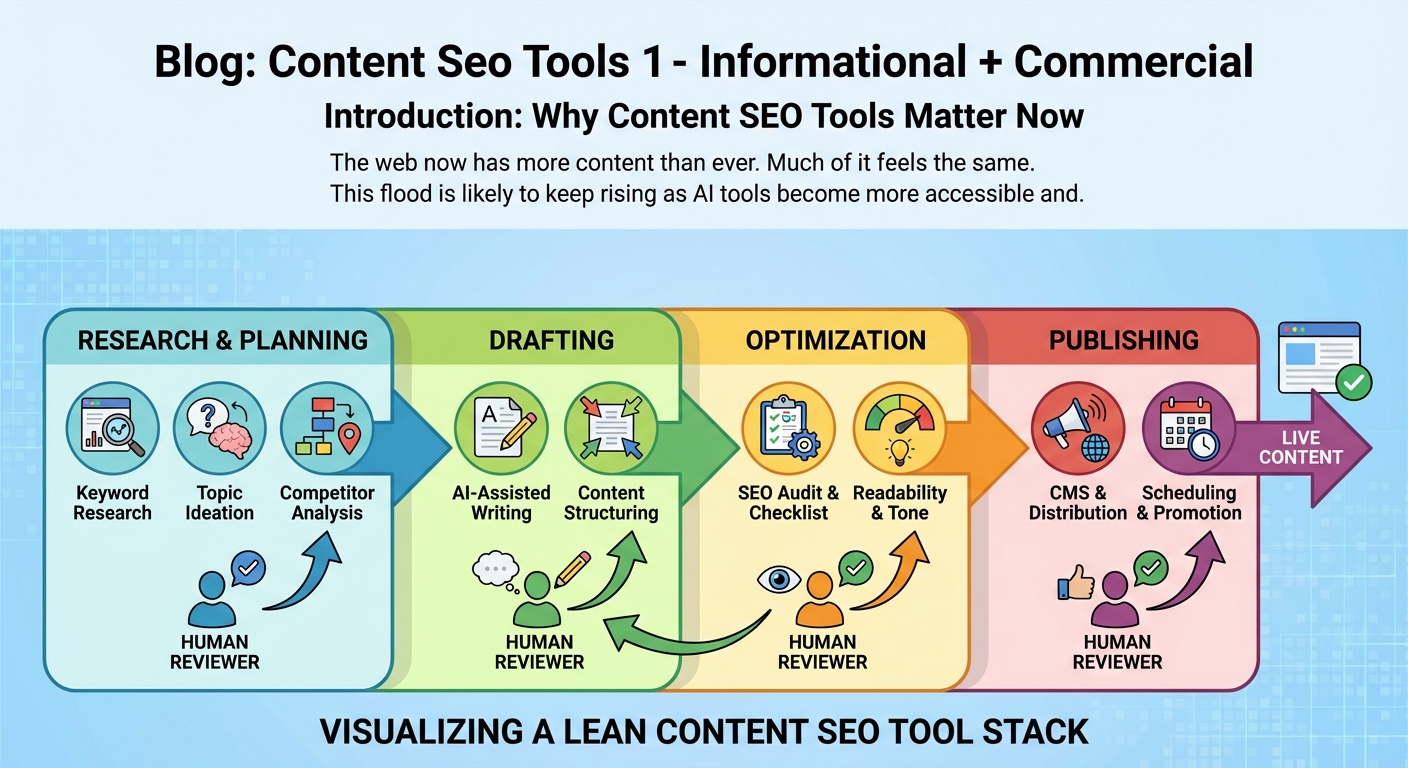
- Section 3: Building a Simple, Hybrid Tool Stack That Works
- Conclusion: Make Tools Serve Your Voice, Not Replace It
Introduction: Why Content SEO Tools Matter Now
The web now has more content than ever. Much of it feels the same. This flood is likely to keep rising as AI tools become more accessible and widely used. Brands that copy others will slip down the page. Brands that stand out will win.
Content SEO tools help you stand out. They guide what to write and how to shape it. They help humans and AI work together in a smart way. At Lyfe Forge, we build systems for this new world. We design flows where strategy stays human, and AI does the heavy lifting.
You will learn three things in this short guide. First, how search is changing in 2026. Second, which types of content SEO tools matter most now. Third, how to build a lean stack that fits your team and budget.
Section 1: Search Has Changed – Your Tools Must Change Too
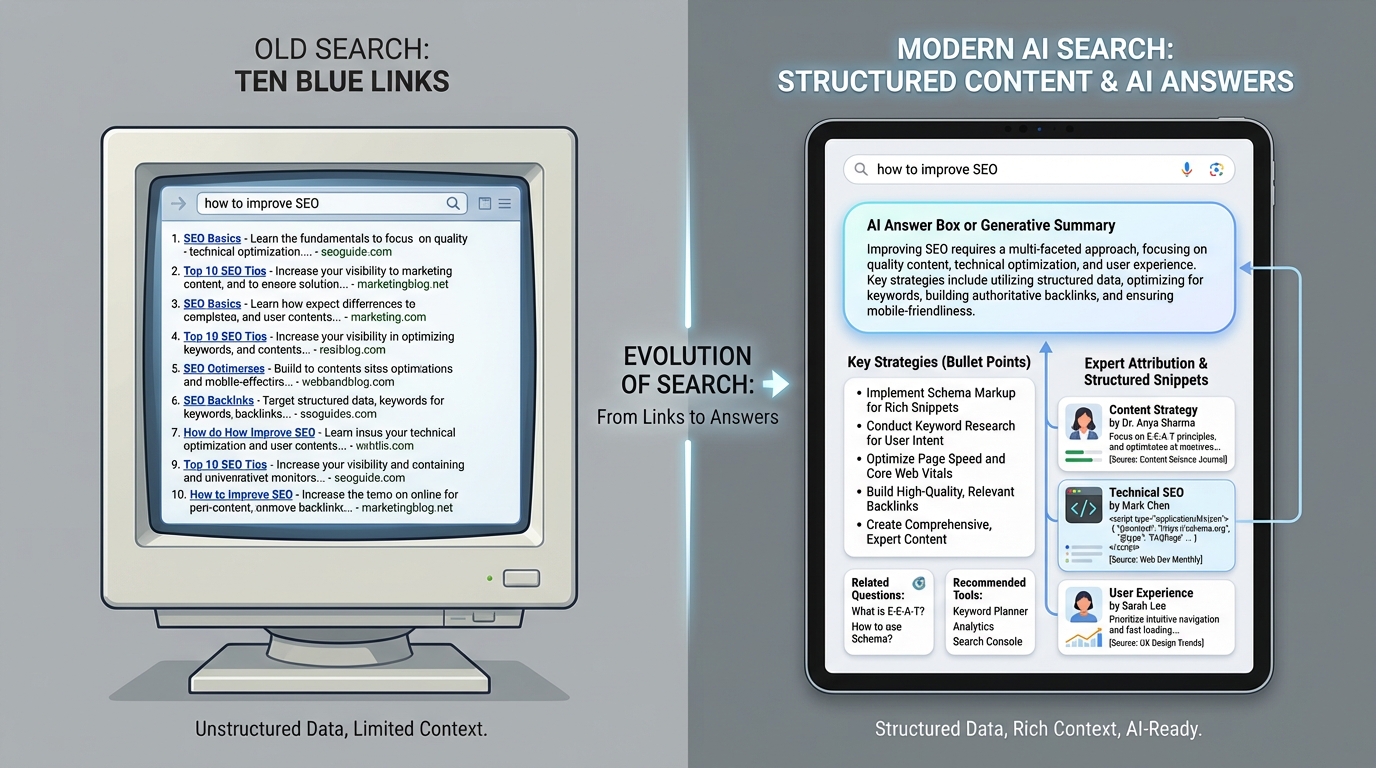
Search is no longer just ten blue links. AI answers now sit above normal results. They pull from sources that seem clear, trusted, and well structured. Your content needs to feed these systems directly.
New “answer engine” and “generative engine” results scan pages in a different way. They look for clean headings, short answers, and clear steps. They also look for proof that a real expert stands behind the words. That is where content SEO tools come in.
Good tools help you see what questions people really ask. They group related topics into clusters, not just single keywords. They show gaps where your brand can add a strong point of view. Experts expect this shift to deepen through 2026, as AI search grows more bold and reshapes visibility across the web, a trend widely tracked by analysts and researchers in the AI and search ecosystem.
But tools alone are not enough. Many AI writers push out safe, bland text by default. That text can hit word counts and basic on-page rules. It still feels thin and empty to people. Recent academic research and university guidance now show that typical AI-generated writing often falls into clear patterns of repetition and simpler, more formulaic structure than human text. This makes it easier to spot and easier to ignore, which aligns with warnings in Why AI Content Isn’t Enough in 2026 (And What Actually Works).
Strong brands flip the model. They start with human ideas and real stories. Then they use tools to shape, expand, and test. Our hybrid content workflows help teams lock this in. We map which steps stay human-only and which steps AI can support.
Section 2: Key Types of Content SEO Tools to Know
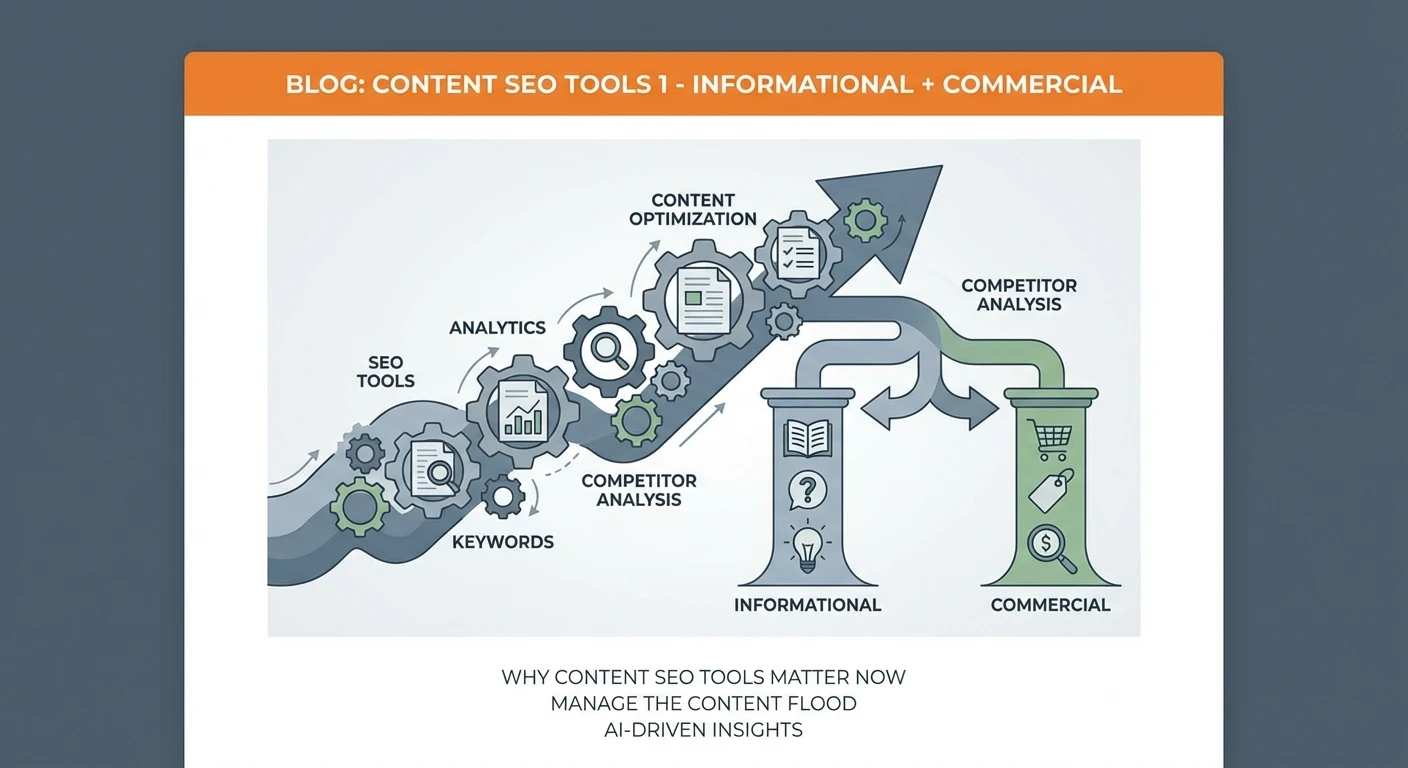
You do not need every tool on the market. You need a small, sharp set. Think in simple layers. Each layer solves a specific job and feeds the next.
First, you have research and planning tools. These find topics, questions, and search trends. Some tools read current results and surface common patterns. Others group many queries into themes. We use a mix inside our AI SEO strategy programs. The goal is always the same. Capture the real language your buyers use, not just short head terms.
Next, you have drafting tools. These can help you outline and write faster. They can turn a bullet list into a rough post. They can suggest angles, titles, and intro hooks. Used poorly, they spit out generic fluff. Used well, they turn a solid brief into a strong first draft. The trick is to keep the human voice in charge at each step. Recent guides on AI writing tools stress this same point. Tools work best when humans drive the insight and edit heavily, a view echoed in How to Currently Stand Out in the AI Content Flood.
Then you have optimisation tools. These tools scan top pages and build content scorecards. They show which concepts appear again and again in high ranking posts. They highlight which related ideas you have missed. Done right, this does not turn your copy into a keyword list. It simply ensures you cover the topic in a full, useful way. Industry experts see these tools as critical for building the kind of topical depth and authority that AI systems look for when choosing which brands to feature in their answers, a focus that’s increasingly central to predictions about how AI-driven, zero‑click search will shape marketing performance by 2026./”>predictions on how AI answers will redefine marketing performance in 2026.
Finally, you have quality and trust tools. They help you check sources, facts, and structure. They flag thin or repeated sections. They also push you toward clear, people-first content. Google’s own documentation leans hard in this direction, explicitly urging creators to prioritize “helpful, reliable, people-first content” and to self-assess against E‑E‑A‑T principles rather than chase search hacks. It rewards content that shows real experience and care for users. Tools that nudge you in that direction are well worth a look.
Section 3: Building a Simple, Hybrid Tool Stack That Works
Let’s turn this into a clear plan. You want a stack that is light, focused, and easy to run. Start with your goals. Do you need more leads, more sign-ups, or more brand search? Your answer shapes which tools matter most.
Begin with one research tool you trust. Use it to map five to ten content themes tied to your goals. For each theme, list real questions your buyers ask. These become the base for your briefs. We often build this map during our content roadmap sprints. The output is simple, but very powerful.
Next, choose one AI drafting tool and set clear rules. For example, ask it to keep first drafts under a set word range. Ask it to write to a specific reader type. Always feed it your outline and key talking points first. This keeps the tool inside your frame. It stops it from drifting into vague, generic space. For many teams, starting inside an all-in-one platform like Lyfe Forge AI keeps these rules consistent across projects.
Then, pass each draft through your optimisation tool. Check that it covers the topic well. Add missing sections, examples, and stories from your own work. Remove any lines that feel like filler. At this stage, you also shape for AI search. Use short, direct headings. Add simple answer boxes near the top. External research suggests this kind of structure can make your page more likely to be pulled into AI summaries, and Lyfe Forge’s built‑in performance tracking (often used as a content ROI calculator) makes it easier to see which pieces justify deeper optimisation.
Last, do a careful human review. Ask a subject expert to read for truth, nuance, and tone. Ask, “Would I share this with a friend who trusts my advice?” If the answer is not a clear yes, keep editing. Studies of user behavior, especially in Australia, indicate that people tend to spend more time on content they perceive as expert, trustworthy, and original. That extra time and trust loops back into stronger search performance over time, a dynamic also explored in MarTechSeries’ four predictions for AI answers and in linkfluencer’s 2026 outlook.
Over time, measure what works. Look at which posts earn links, mentions, and real leads. Adjust your tool use based on those wins. We help teams build these feedback loops into their stack. Our SEO analytics framework ties content and results together so you can see the impact clearly, with flexible pricing plans that let you start free and scale only when the numbers prove out.
Conclusion: Make Tools Serve Your Voice, Not Replace It
Content SEO tools are now vital, but they are still just tools. They should speed you up, not speak for you. Your lived experience and point of view remain your real edge, and platforms like Lyfe Forge vs Jasper, Copy.ai & others can help you choose the setup that protects that edge.
Focus on three things and you will stay ahead. First, understand how AI search now finds and features content. Second, build a small, sharp stack that supports each stage of your process. Third, keep humans in charge of insight, editing, and final sign-off. As leading strategists warn, this blend of human judgment and smart automation is what separates forgettable output from durable assets.
If you want help designing that stack, we would love to talk. Visit Lyfe Forge to explore our strategy, workflow, and analytics services, review our Terms of Service and Privacy Policy, and get in touch via the contact page. Together, we can turn the AI content wave into a growth engine for your brand while staying fully aligned with our cookie policy and ethical data use.
Frequently Asked Questions
What are content SEO tools and why do they matter in 2026?
Content SEO tools are software platforms that help you research topics, structure pages, and optimise writing so it ranks and gets picked up by search and AI answer engines. In 2026 they matter more because search results now include generative and AI summary boxes that favour clear, expert-backed, well-structured content. The right tools help you target real questions people ask, avoid thin generic copy, and stand out from brands using basic AI text only.
How are AI search results changing the way I should use SEO tools?
AI search results and answer engines scan content for clear headings, concise answers, step-by-step guidance, and signs of real expertise. This means you should use SEO tools less for keyword stuffing and more for mapping question clusters, outlining content clearly, and supporting expert-driven insights. Tools that show topic clusters, SERP features, and question-based queries are now more valuable than ones that only give you keyword volumes.
What types of content SEO tools do I actually need in my stack?
Most teams can get far with four layers of tools: keyword and topic research, on-page optimisation, content outlining and drafting (often with AI support), and performance tracking. You may add tools for internal linking or content briefs as you grow. The key is to choose a lean stack that fits your workflow instead of collecting overlapping tools you won’t fully use.
How do content SEO tools help me avoid generic AI content?
Tools can show you what everyone else is already saying so you can deliberately take a different angle. They surface gaps, overlooked subtopics, and user questions that generic AI outputs often miss. When you start with human ideas and then run them through your tools to refine structure, depth, and clarity, you get content that feels original while still being optimised.
How can I build a lean content SEO tool stack on a small budget?
Start by listing the exact steps in your content workflow: research, planning, writing, optimisation, and tracking. Then choose one reliable tool for research, one for on-page optimisation, and one AI assistant or writing tool, instead of several in each category. Lyfe Forge helps teams design these lean stacks and integrate them into repeatable workflows so you only pay for tools that directly support your strategy.
What is a hybrid content workflow and how does Lyfe Forge support it?
A hybrid content workflow is a process where strategy and key decisions stay human-led, while AI handles repetitive or heavy-lift tasks like expansion, editing, and basic optimisation. Lyfe Forge designs and implements these workflows so you know which steps must be done by subject-matter experts and where AI tools safely plug in. This helps you scale content without losing brand voice or depth.
Can content SEO tools really improve my chances of appearing in AI answer boxes?
Yes, because AI answer systems prefer content that is well structured, directly answers questions, and signals trust and expertise. Research and optimisation tools help you identify the common questions, structure your headings and summaries, and include concise, quotable answers. Combined with clear author expertise and a strong point of view, this can significantly increase your visibility in AI-driven results.
How do I choose between different content SEO tools on the market?
Evaluate tools based on your content volume, team skills, and main bottlenecks, not just feature lists. Test whether a tool helps you find better topics, produce content faster without losing quality, or improve rankings in a measurable way. Lyfe Forge can audit your current process and recommend a minimal set of tools that align with your goals and budget.
Do I still need human writers if I use advanced AI and SEO tools?
Yes, because AI tends to default to safe, formulaic writing that often feels bland and repetitive. Human writers bring real stories, insight, and nuance that search engines and readers both reward, while tools help them structure and scale their work. Lyfe Forge’s approach is to keep strategy, narrative, and expert opinions human-led, with AI and SEO tools supporting the execution.
How can Lyfe Forge help my business improve content SEO performance?
Lyfe Forge specialises in building content systems that blend human strategy with AI and SEO tools. They help you map your content opportunities, design hybrid workflows, and set up the right tool stack to support them. This gives you a repeatable way to plan, produce, and optimise content that performs in both traditional search and emerging AI answer engines.