
Date published: 31 March 2026
Estimated reading time: 12 minutes
Table of Contents
- Introduction: Why Topical Authority Now Decides Who Wins Search
- 1. What Topical Authority Really Is (And Why Tools Matter)
- 2. How Lyfe Forge Builds Topic Clusters End‑to‑End
- 3. AI Research, E‑E‑A‑T and Safer Scale with Lyfe Forge
- 4. Lyfe Forge vs Traditional Content SEO Tools
- Practical Ways to Use Lyfe Forge to Grow Topical Authority Fast
- Conclusion: Turn Lyfe Forge into Your Topical Authority Engine
Introduction: Why Topical Authority Now Decides Who Wins Search
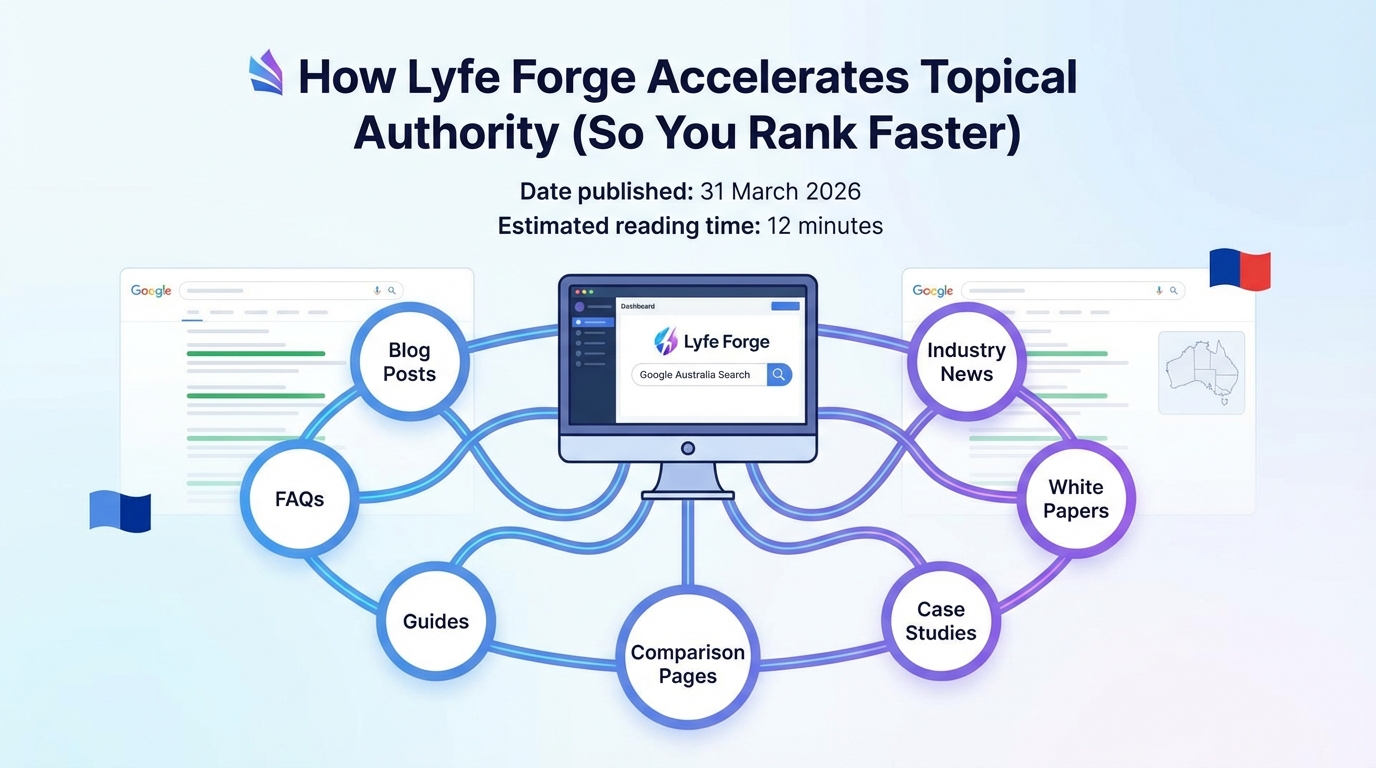
In 2026, ranking in Google Australia is less about one perfect blog post and more about topical authority. Search and AI Overviews now favour sites that cover a subject in depth, with clear structure and strong internal links, and research on topical authority shows this shift is only accelerating. If your competitors publish full content clusters while you ship one article a month, you lose the visibility battle before it even starts. However, some experts argue that this narrative can be a little too neat. Yes, in‑depth content, clear structure, and tight internal links are powerful signals – but they’re not the whole story, and they’re certainly not guarantees. In competitive Australian SERPs, traditional factors like backlinks, brand recognition, user engagement, and even query intent can still override a beautifully architected content cluster Google’s Algorithm Update 2025: What It Means for Your Website. Others point out that AI Overviews are still volatile, with ongoing experiments that sometimes surface smaller, niche pages or fresh updates over established “authorities” How Google’s AI Overviews Are Changing Search Rankings How to Rank in Google AI Overviews. In other words, topical authority matters a lot, but it sits inside a noisy, multi-signal ecosystem where speed, originality, and real-world reputation can still tilt the balance Google Algorithm Updates 2026: Impact on Australian SEO.
Lyfe Forge exists to flip that script. It compresses months of research, writing and SEO implementation into days, so you can build topic clusters at startup speed instead of slow‑agency pace. In this guide, we’ll unpack what topical authority actually means, how AI‑driven content SEO tools support it, and step through how Lyfe Forge accelerates every stage of the workflow for Australian brands, drawing on playbooks like How to Build Topical Authority & Win in AI Search to keep your strategy grounded in current best practice.
1. What Topical Authority Really Is (And Why Tools Matter)
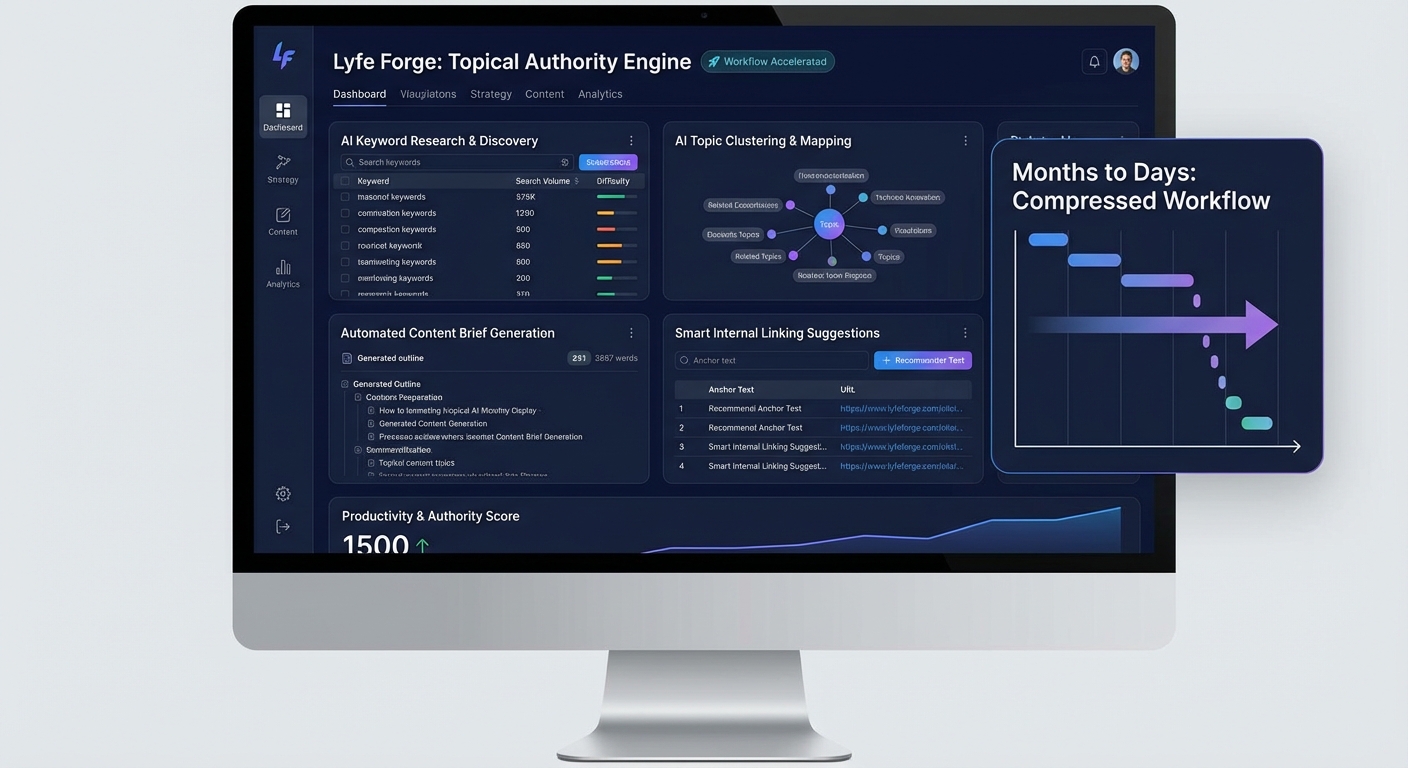
Topical authority means your site is the “go‑to” source on a subject, not just a place that ranks for a few random keywords. You show this by covering the full “topic universe” around a theme: core definitions, subtopics, FAQs, use cases, buyer guides, comparison pieces, even common mistakes. That web of coverage tells search engines, “this brand genuinely understands this space.” In Australia, this plays out clearly when smaller, niche sites outrank big publishers by going deep instead of broad, a pattern echoed in guides such as Topical Authority SEO: Your Moat Against AI Search.
The modern structure for this is the topic cluster. You create a pillar page that acts as the definitive guide to a broad topic, like “solar rebates in Australia”, then support it with cluster pages on related angles – state‑by‑state rules, installer checklists, financing options, and so on. Smart internal linking connects pillar and cluster content, plus cross‑links between related cluster pages. This internal link web is a key technical signal that helps Google understand your expertise and content hierarchy. https://www.rankmax.com.au/articles/topical-authority
At the same time, Google and AI answer engines are shifting from the old “one page, one keyword” mindset towards Generative Engine Optimisation. Instead of pulling a single blue link, AI Overviews synthesise answers from multiple trusted sources. Sites that show structured expertise across a topic – clear clusters, strong E‑E‑A‑T, consistent quality – are more likely to be cited in those summaries and other zero‑click responses, especially when they’re built using AI tools for topic clustering that map a niche comprehensively. In other words, topical authority is becoming your moat against both competitors and AI‑driven SERP changes. https://seenos.ai/google-ai-overviews/improve-visibility
Doing this manually is brutal. You have to research hundreds of keyword variations, group them into clusters, design pillar pages, brief writers, manage internal links, and keep everything updated as stats go stale. That’s where content SEO tools come in. The right platform doesn’t just help you write – it helps you design, build and maintain topic clusters at scale. Lyfe Forge is built specifically around that idea, which is why it looks very different from a simple “AI blog writer.”
2. How Lyfe Forge Builds Topic Clusters End‑to‑End
Most tools jump in halfway through your workflow. Lyfe Forge kicks in once you’re ready to plan, with the Ideas Engine mapping your topic landscape. You give it a niche – say, “NDIS plan management” or “Sydney commercial fitouts” – and it generates structured content ideas based on your market, competitors, and existing gaps on your own site. Each idea is tracked through its lifecycle, so you always know whether a concept is still a seed, in drafting, ready to publish, or already live and driving traffic.
The next layer is SIGA: Search Intent Gap Analysis. Instead of chasing the same high‑volume terms as everyone else, SIGA looks for places where search demand exists but competitors have weak, shallow or totally missing content. These become your “easy win” subtopics that you can own early. Lyfe Forge then expands each winning keyword into a long‑tail map – related queries, question variants, and supporting themes – so your future cluster is planned before a single paragraph is written.
Once the topic framework is clear, Lyfe Forge’s multi‑engine research kicks in. Instead of relying on a single model, it simultaneously queries OpenAI, Gemini, Perplexity, Grok and Brave Search, then fuses the strongest insights into one cohesive output. The platform cross‑checks answers, surfacing points of agreement and disagreement, and attaches citations plus confidence scores. This gives you a deep, current research base for pillar and cluster pages, without spending half a day buried in tabs and PDFs for each article, and aligns neatly with the kind of AI‑assisted workflows described in How to Build Topic Clusters for SEO and AI Visibility.
From there, blog generation ties everything together. Lyfe Forge doesn’t just spit out a “SEO‑ish” draft: it weaves in target keywords, meta titles, descriptions, schema markup and, critically, internal links from the start. Because the system understands your existing content library, it can suggest or auto‑insert links between new and old pieces, and between related cluster pages. Think of it as building the topic cluster’s skeleton – pillar, clusters, and connective tissue – in one pass, rather than patching links in later with manual SEO clean‑up. https://seosandwitch.com/internal-linking-seo-statistics
The final structural piece is the Internal Link Map. As your library grows, Lyfe Forge visualises how every article connects. You can see which clusters are dense and healthy, which pages are “orphans” with no links, and where you might need a new pillar to organise fast‑growing sets of posts. For content leads and founders, this map is the difference between “we’ve published a lot of blogs” and “we have three strong clusters that actually push rankings.”
3. AI Research, E‑E‑A‑T and Safer Scale with Lyfe Forge
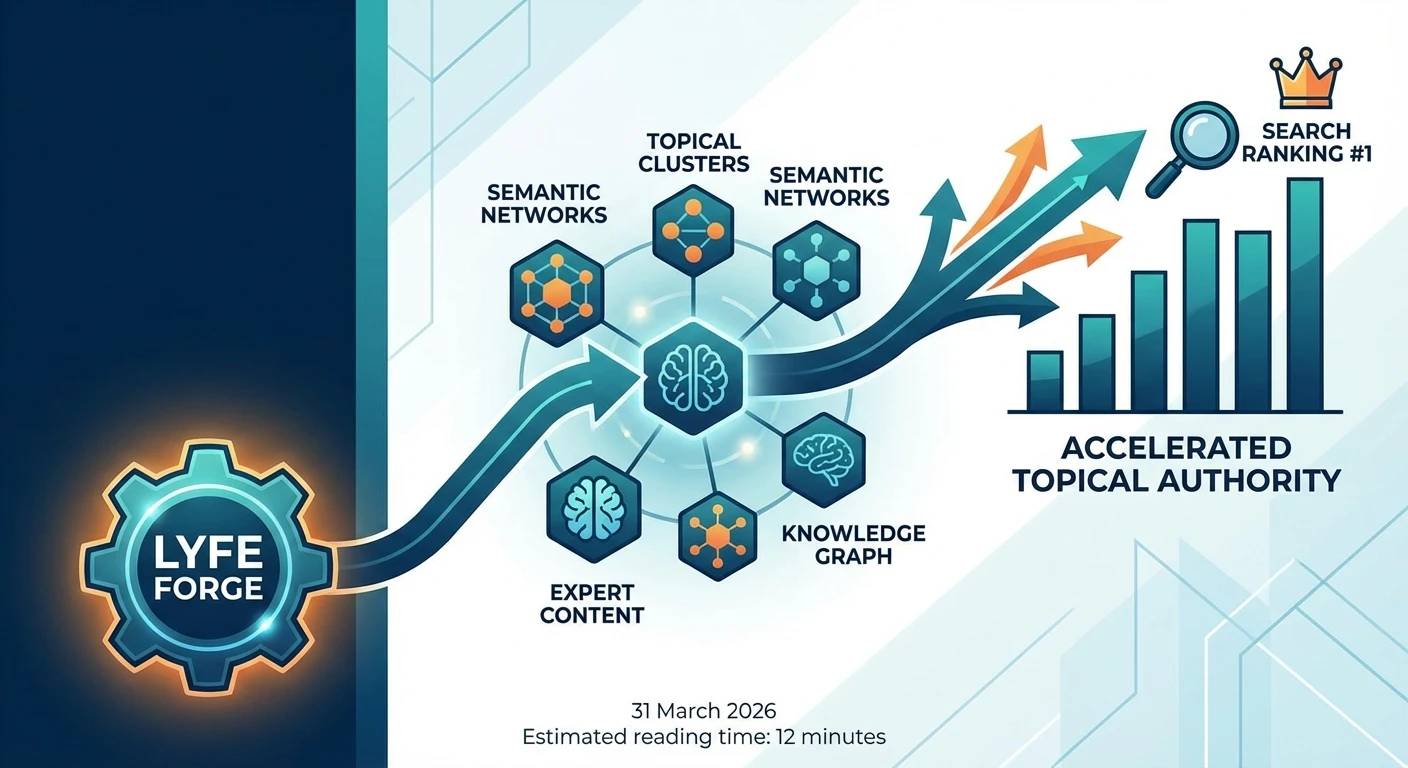
Topical authority isn’t only about volume. Google still leans heavily on E‑E‑A‑T: experience, expertise, authoritativeness, and trust. AI can help you move faster, but if you ship thin, generic content at scale, you simply train search engines to ignore you. Lyfe Forge’s design leans into a hybrid AI – human model, so you get the speed without sacrificing credibility, very much in line with guidance like Build Topical Authority Using AI: The Advanced SEO Playbook.
Start with the Client DNA Vault. This is where you store your brand voice, preferred terminology, banned phrases, local spelling rules, and even competitive positioning. The Writing Style Engine uses that DNA every time it drafts content, so a 10‑article cluster still sounds like one seasoned expert, not ten different freelancers from ten time zones. Consistent voice builds trust with readers and, over time, with algorithms that see users staying and engaging with your content.
Then there’s multi‑engine fact verification. Authority is fragile – one dodgy stat or misquoted regulation and you lose trust, especially in tightly regulated Australian niches like finance or health. Lyfe Forge checks key factual claims against its mix of AI sources and the broader web, flagging anything that looks weak, out of date, or inconsistent. You (or your editor) still make the final call, but you’re not starting from zero every time. This “AI pre‑check, human final check” pattern lines up with research showing that hybrid workflows tend to deliver strong time savings while maintaining quality when humans stay in the loop. https://arxiv.org/abs/2305.01145
That same hybrid thinking runs across the rest of the workflow. Lyfe Forge handles ideation, clustering, research synthesis, and first drafts; your team adds lived experience, local examples, and intent‑level nuance. For instance, the tool might outline a guide on “small business bookkeeping in Melbourne”, but your in‑house accountant can layer in real client scenarios and ATO quirks. This blend of automation and lived expertise is exactly what Google’s guidelines encourage – AI assistance is fine, provided the final result is accurate, original, and truly useful. https://www.rankmax.com.au/articles/is-ai-content-bad-for-seo
Finally, Lyfe Forge doesn’t treat publication as the finish line. Content Decay Detection watches for slipping rankings, falling click‑through rates, and outdated information across your clusters. When it spots issues, the platform suggests updates: refresh stats, add FAQs based on new queries, or plug in internal links to recently published pieces. Because AI Overviews and search behaviour keep shifting, this “maintain and extend” loop is crucial – your topical authority needs to move with the market, not fossilise.
4. Lyfe Forge vs Traditional Content SEO Tools
If you already use tools like Ahrefs, Semrush or Surfer, you might be wondering where Lyfe Forge fits. Classic SEO platforms excel at data: keyword volumes, backlink profiles, SERP snapshots, technical audits. They’re brilliant for spotting opportunities and issues, but they usually stop short of managing the full content production pipeline from “idea” to “published, interlinked cluster.”
Most AI writers sit at the opposite extreme. They can generate a draft quickly, but they don’t know your wider strategy, your existing library, or how an article should plug into a cluster. You still have to plan topics elsewhere, wire up internal links by hand, and run separate fact‑checking and optimisation passes. In practice, that means more content, but not necessarily more authority.
Lyfe Forge is built around topical authority as the core use case. The Ideas Engine and SIGA replace a lot of manual spreadsheet work. Multi‑engine research replaces hours of tab‑hopping. Blog generation with baked‑in metadata, schema and internal links replaces multiple hand‑offs between writer, SEO specialist and content manager. Then Content Decay Detection handles the on‑going maintenance that typically gets pushed to “later” (and quietly never happens).
You can, and probably should, still pair Lyfe Forge with your favourite data tools. For example, you might use Ahrefs to pull a big keyword list and competitor gaps, then feed those into Lyfe Forge for clustering, research and cluster build‑out. Or use Semrush’s local SEO modules to guide a national‑plus‑local content plan, while Lyfe Forge executes the writing and internal linking. This kind of stack – data‑heavy SEO platform plus a content‑first authority engine – matches where many Australian teams are heading as AI becomes a normal part of daily SEO work. https://indexcraft.in/blog/ai-seo-tools-guide
The key point is ownership of the workflow. Traditional tools tell you what content you could create; Lyfe Forge actually helps you create, connect and maintain it at scale. If your goal is to become the leading voice on a topic – whether that’s “Perth family law”, “B2B SaaS onboarding” or “off‑grid tiny homes” – you need that kind of end‑to‑end support, not another disconnected dashboard.
Practical Ways to Use Lyfe Forge to Grow Topical Authority Fast
To make this concrete, here’s a simple way an Australian marketing team could use Lyfe Forge over 90 days. Start by picking one commercial topic that matters most to revenue – say “managed IT services Brisbane” or “online tutoring for HSC maths.” Use the Ideas Engine and SIGA to map at least one strong pillar and 15 – 25 supporting cluster articles around that theme, following proven structures such as those in How to Build Topic Clusters for AI SEO.
Next, move through multi‑engine research and blog generation in batches. For week one, focus on your pillar and three critical cluster pieces: definitions, pricing, and “how to choose” content. Lock in your brand voice with the Client DNA Vault first, so every draft comes out in a consistent tone. During editing, add real‑world stories, screenshots, and local references (suburbs, regulations, Australian spelling and examples).
In weeks two to four, ship the rest of the cluster. Aim to publish at least four to six articles per week until the map is complete. Let Lyfe Forge handle internal linking and schema suggestions; your focus should be tightening intros, adding CTAs, and confirming that each article matches clear search intent. As data rolls into Search Console and analytics, use Content Decay Detection and performance insights to tune titles, expand thin sections, and patch gaps where impressions are high but clicks are low. https://www.ibeamconsulting.com/blog/google-search-console-rank-tracking-limitations
Once the first cluster is stable, repeat the same pattern for your next topic. Over a year, that rhythm – plan one cluster, ship it fast, maintain it, then move on – creates a network of authority zones across your site. That’s the real power of Lyfe Forge: not just more content, but a repeatable engine for building and defending topical authority in the areas that actually drive revenue.

Conclusion: Turn Lyfe Forge into Your Topical Authority Engine
Topical authority is no longer a “nice to have” for SEO in Australia. It’s the deciding factor in who shows up in Google’s blue links, AI Overviews, and all the little SERP features that steal attention. Building that authority manually is slow and painful; doing it with scattershot AI tools can be risky and chaotic.
Lyfe Forge gives you a different path. It joins ideation, keyword gaps, multi‑engine research, SEO‑ready drafting, internal linking, and ongoing optimisation into one pipeline built specifically for topic clusters. If you’re ready to move from random blogs to a true authority strategy, this is the moment to test it in your own niche. Map one cluster, run it through Lyfe Forge end‑to‑end, and measure the difference in both speed and search visibility.
When you’re ready, you can transform content creation with Lyfe Forge AI on a free plan, explore the pricing options that fit your team, and learn more about the platform’s Australian roots on the About Lyfe Forge page or through the regularly updated Lyfe Forge blog.
Sources used in this article (non‑exhaustive):
-
https://www.rankmax.com.au/articles/is-ai-content-bad-for-seo
-
https://www.ibeamconsulting.com/blog/google-search-console-rank-tracking-limitations/
-
Lyfe Forge Terms and the detailed Terms of Service
-
Google API Policy and the public post sitemap for published clusters
Frequently Asked Questions
What is topical authority in SEO and why does it matter in 2026?
Topical authority is how clearly Google and AI systems see your site as a trustworthy, in‑depth source on a specific subject. In 2026, especially in Google Australia, sites that cover a topic with complete content clusters, clear structure, and strong internal linking tend to outrank sites with just a few isolated blog posts. It’s also a key signal for being included in AI Overviews. While backlinks and brand still matter, topical authority increasingly decides who wins competitive search results.
How does Lyfe Forge help me build topical authority faster?
Lyfe Forge compresses months of SEO research, content planning, writing and internal linking into days by using AI and proven cluster frameworks. It helps you map out full topic clusters instead of one‑off posts, then generates outlines, briefs and content that all interlink and support a clear topical structure. This lets you publish an entire cluster in a short window, which is critical for signalling authority to Google and AI Overviews. The result is faster visibility and more stable rankings in Australian SERPs.
What makes Lyfe Forge different from other AI content tools?
Most AI tools focus on writing single articles, but Lyfe Forge is built around topic clusters and search strategy first. It helps you design a complete content architecture, prioritise cluster order, and implement internal links and on‑page SEO at scale. It’s also tuned for the realities of Australian search, including local SERPs and Google’s recent algorithm changes. Instead of just generating text, it accelerates the whole workflow from research to publishing.
Can Lyfe Forge help my site rank in Google’s AI Overviews?
Lyfe Forge can’t guarantee inclusion in AI Overviews, but it improves the key factors those overviews look for: depth of coverage, topical structure, freshness and internal linking. By publishing a coherent cluster quickly, you increase the chance that Google’s AI recognises your site as a comprehensive resource on that subject. The platform also encourages updating and expanding content, which helps with volatile AI Overview results. Combined with good UX and backlinks, this can significantly improve your visibility.
How does Lyfe Forge speed up the content cluster creation process?
Lyfe Forge automates keyword research, topic clustering, and content brief creation so you’re not manually building everything in spreadsheets. It generates SEO‑ready outlines, suggests internal linking paths, and can produce first drafts that your team then refines. This means you can move from idea to a full cluster of 10–30+ interlinked articles in days instead of months. The faster you publish a complete cluster, the quicker Google can understand your topical authority.
Is topical authority enough, or do I still need backlinks and PR if I use Lyfe Forge?
Topical authority is powerful, but it doesn’t replace backlinks, brand signals or user engagement. Lyfe Forge helps you win the on‑site content and structure battle, which makes any link building or PR you do more effective. In competitive Australian industries, you’ll usually need both strong topical coverage and a solid off‑page strategy. Think of Lyfe Forge as the engine for your content foundation, not a substitute for your entire SEO program.
Is Lyfe Forge suitable for small Australian businesses or just big brands?
Lyfe Forge is designed to help smaller businesses and lean teams compete with bigger brands by producing clusters at “startup speed.” Even if you don’t have a large marketing team, you can use the platform to plan and publish focused clusters around your most valuable services. This lets you carve out authority in specific niches rather than trying to outrank major brands on everything. Larger brands can use it to scale content production across multiple topics and markets.
How long does it take to see SEO results from using Lyfe Forge for topical authority?
Most sites start to see movement within a few weeks of publishing a well‑built cluster, but strong results usually appear over 3–6 months, depending on competition and domain strength. The big advantage of Lyfe Forge is that you can publish the whole cluster quickly, so Google gets a clear, complete topical signal sooner. That often leads to faster indexing, better crawl paths, and earlier ranking improvements than drip‑feeding one post a month. Timelines will still vary based on backlinks, technical SEO, and your existing authority.
Do I still need an SEO agency if I use Lyfe Forge?
You can use Lyfe Forge on its own, but many businesses pair it with an SEO agency or consultant for best results. The platform handles the heavy lifting of topical research, clustering and content production, while your SEO partner can focus on technical fixes, digital PR, and ongoing strategy. If you’re in‑house only, Lyfe Forge can significantly reduce your dependency on agency hours for content planning and writing. It’s flexible enough to support both DIY and agency‑led setups.